
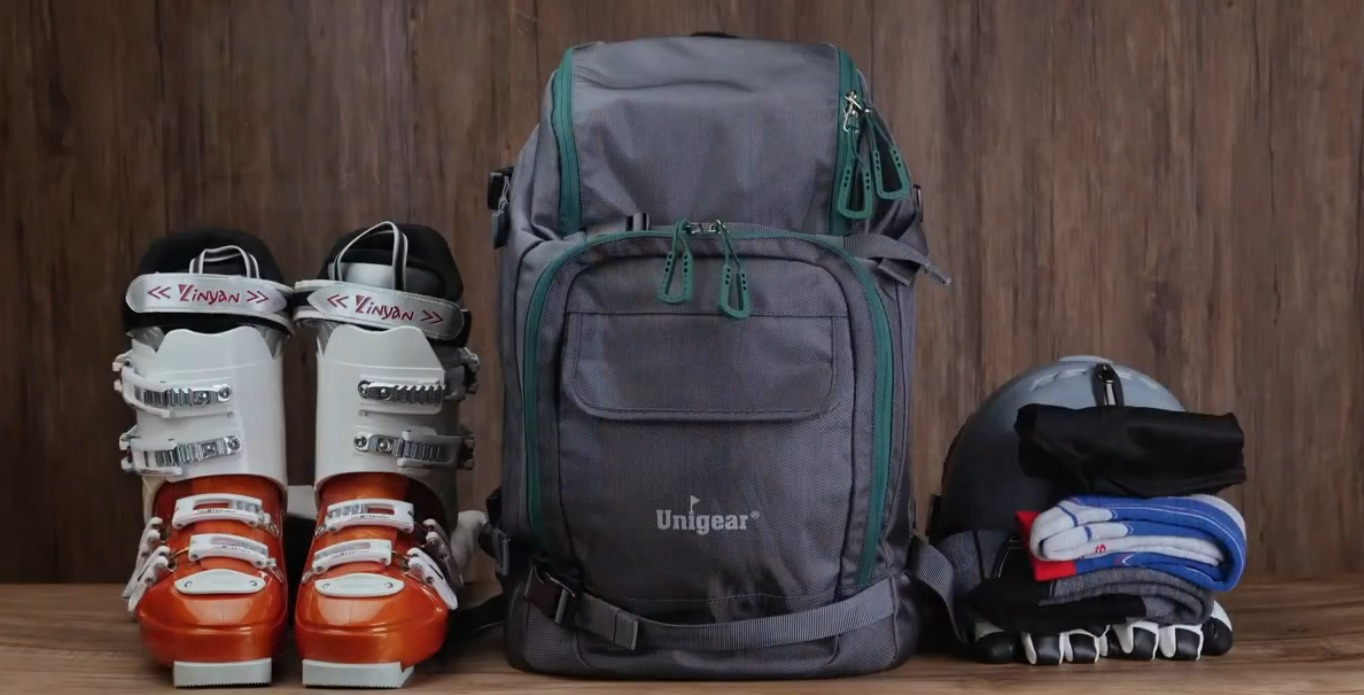
I’ve lost count of how many times I’ve watched someone in a parking lot do the “juggle dance” with wet boots, a helmet, loose gloves, and a half-zipped backpack. So I pulled together five popular ski boot bags and tested them the way people actually use them: loading them with real gear (boots, helmet, goggles, gloves, midlayer, shell), carrying them from car-to-lodge and through crowded boot rooms, and dealing with the annoying stuff like wet snow, slushy floors, and tiny hotel entryways.
What I cared about most was simple: does the bag keep your gear organized, keep the wet stuff from ruining everything else, and carry comfortably when it’s packed heavy?
The products I tested in this guide are: Unigear (ASIN B07X2WHHM7), SEMSTY (ASIN B0BJF2H64C), RESVIN (ASIN B08FQXB4YT), Athletico (ASIN B01MFG1362), and an expandable 55L–70L option from Heliar (ASIN B0FMP5L9WN).
Quick buying questions
- Do you want “everything in one bag,” or just boots?
If you want helmet + goggles + outerwear in one place, go 50L–70L backpack style. If you already use a separate duffel, a simpler boot-focused bag can be easier. - How wet is your reality?
If you ski in slushy conditions, travel a lot, or throw your bag in a snowy trunk, a waterproof bottom and tougher fabric matter way more than people think. - What boot size are you packing?
Most of these are fine for typical adult boots, but if you’re packing bulky boots (or size 12+), look for bags that explicitly mention larger boot fit. - Do you want a standing mat / “flip-down panel”?
This is one of those features you don’t care about until you use it. Changing into boots without soaking your socks is a win. - How far do you actually carry it?
Parking lot to lodge is one thing. Walking through airports or shuttles is another. If you carry it far, comfort and strap padding become deal-breakers.
Ski boot bag types (and who they’re for)
| Type | What it is | Best for | Trade-offs |
|---|---|---|---|
| Backpack-style ski boot bag | Boots + helmet + accessories in separate compartments | Most skiers/snowboarders who want one grab-and-go bag | Can get heavy when fully loaded |
| Expandable backpack-style | Same as above, but can grow in capacity | People who sometimes pack light, sometimes pack everything | Slightly bulkier, more zippers/points of failure |
| Classic boot bag (side-entry) | Boots in side pockets + center compartment for gear | Quick boot-room changes, simple organization | Less “structured” storage than premium backpack designs |
| Travel-leaning gear hauler | Large capacity and tougher materials | Frequent travelers, families, heavy packers | Bigger footprint, easier to overpack |
Our top picks by category
| Category | Top Pick | Why it won |
|---|---|---|
| Best overall | Unigear Ski Boot Bag Backpack for Helmet 50L/70L (ASIN B07X2WHHM7) | Strong all-around layout, organized compartments, solid carry comfort |
| Best value for most people | SEMSTY Ski Boot Bag 55L/70L Waterproof Travel Backpack (ASIN B0BJF2H64C) | Practical organization and good waterproofing without getting pricey |
| Best heavy-duty feel | RESVIN Ski Boot Bag 65L Durable Travel Backpack (ASIN B08FQXB4YT) | Built to take a beating, big capacity, travel-ready vibe |
| Best simple side-pocket layout | Athletico Ski Boot Bag – Skiing & Snowboarding Travel Luggage (ASIN B01MFG1362) | Easy boot access, classic design, no overthinking it |
| Best for flexible packers | Heliar 55L–70L Expandable Ski Boot Bag (ASIN B0FMP5L9WN) | Expandable space for trips where “extras” magically happen |
Hands-on reviews (what it felt like using each one)
Unigear Ski Boot Bag Backpack for Helmet
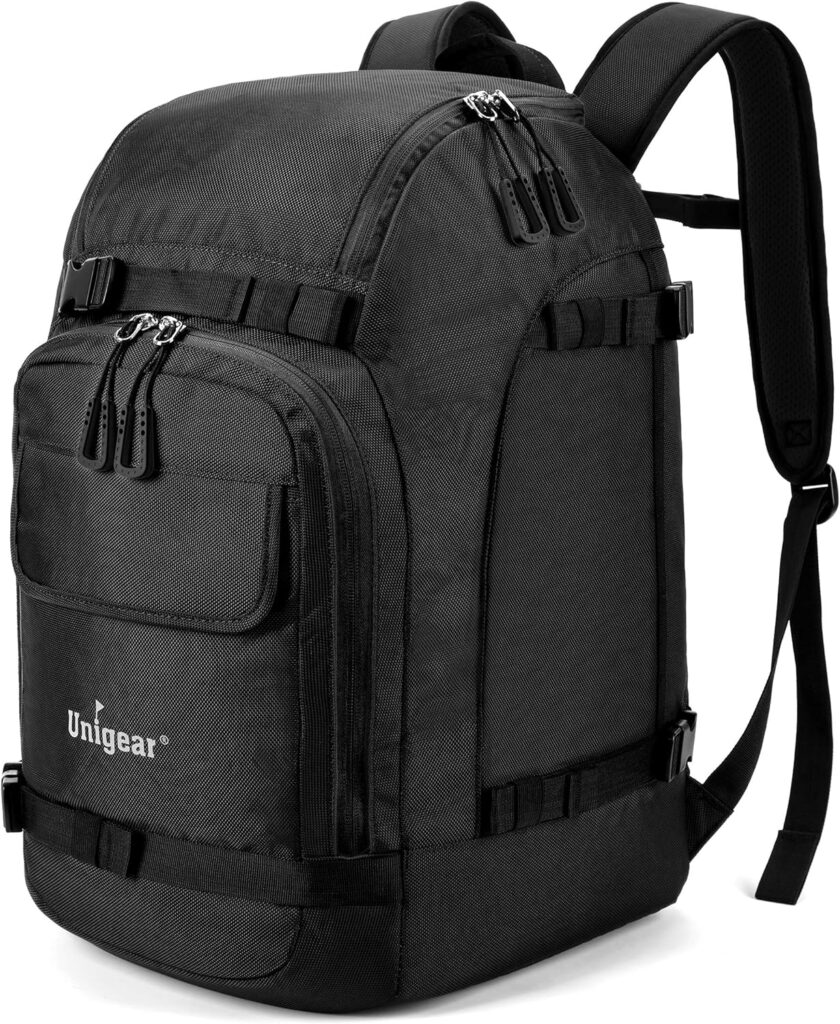
Tested by: Me (day trips + a weekend lodge stay)
Best for: Most skiers and snowboarders who want one bag that does it all without drama
Why We Like It: The layout makes sense the second you open it. Boots have a real home, helmet storage is easy, and you don’t end up stuffing goggles somewhere dumb where they’ll get scratched. It also carries nicely when it’s fully loaded, which is usually where cheaper bags fall apart.
Pros
- Smart, “no-brainer” organization with separate compartments
- Waterproof/durable materials (tarpaulin + tough nylon) help with wet gear
- Flip-down panel works as a changing mat (small feature, big quality-of-life boost)
- Comfortable enough to carry even when you’ve overpacked
Cons
- If you fill it like a Tetris champion, it can get heavy fast (that’s the curse of “one bag”)
- 50L can feel tight if you’re stuffing bulky outerwear; you may prefer the larger option if available.
SEMSTY Ski Boot Bag
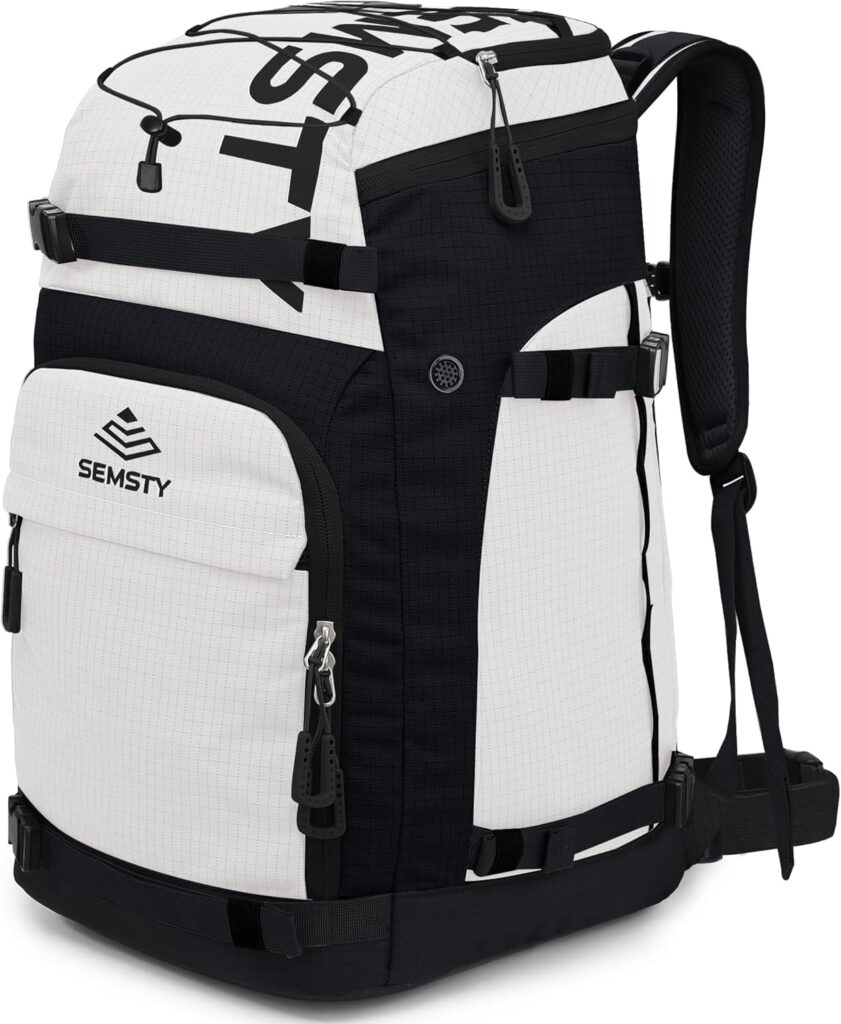
Best for: Budget-to-mid shoppers who still want a “real” ski boot backpack
Why We Like It: This one surprised me in a good way. It’s organized, it’s legitimately usable, and it doesn’t feel like a floppy sack once boots go in. The waterproofing and bottom protection are the real reason it earns a spot here—because ski boot rooms and parking lots are basically water parks in winter.
Pros
- Waterproof exterior fabric and protected bottom help a lot with slush and puddles
- Comfortable padded back panel keeps boots from jabbing your spine
- Good compartment approach: you can actually find your stuff quickly
- Works well for people who want “all gear in one backpack” without paying premium prices
Cons
- Depending on how you pack, goggles still need a little care (use a hard case or keep them in a soft pouch)
- If you’re rough on zippers, don’t yank them one-handed while the bag is overstuffed (common sense, but worth saying)
RESVIN Ski Boot Bag
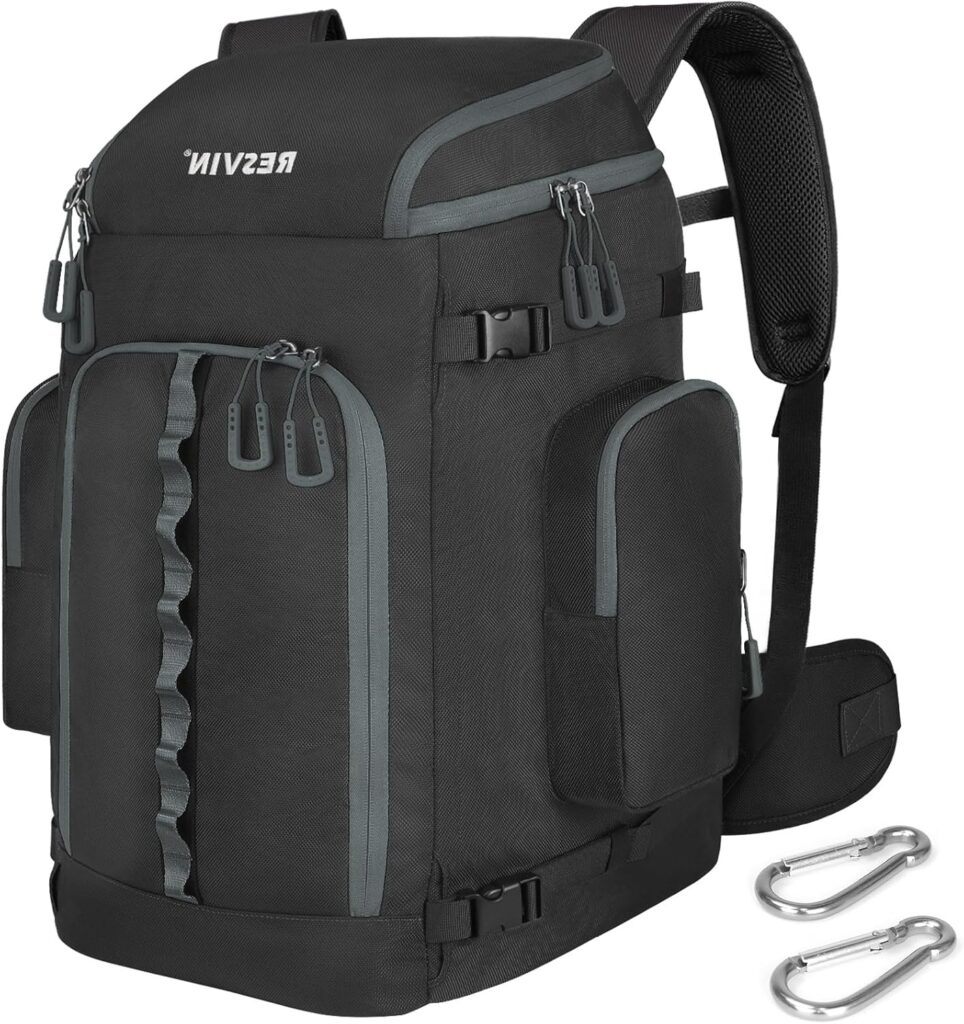
Best for: Travelers, heavier packers, and anyone who’s hard on their gear
Why We Like It: If you’re the kind of person who brings extra layers “just in case,” this is the bag category you want: bigger capacity, tougher vibe, and less stress about cramming. The RESVIN name shows up as a 65L durable, waterproof backpack style ski boot bag, which is exactly the lane it fits into.
Pros
- Big capacity makes it easier to pack helmet + layers without fighting the zipper
- “Durable backpack” style is better for travel days than soft, unstructured duffels
- Waterproof build style is what you want when your boots go in wet and your jacket is still dry
Cons
- Bigger bags tempt you to overpack, and then you’re the person hauling a mini-closet on your back
- Large capacity usually means a larger footprint in tight lodge cubbies
Athletico Ski Boot Bag
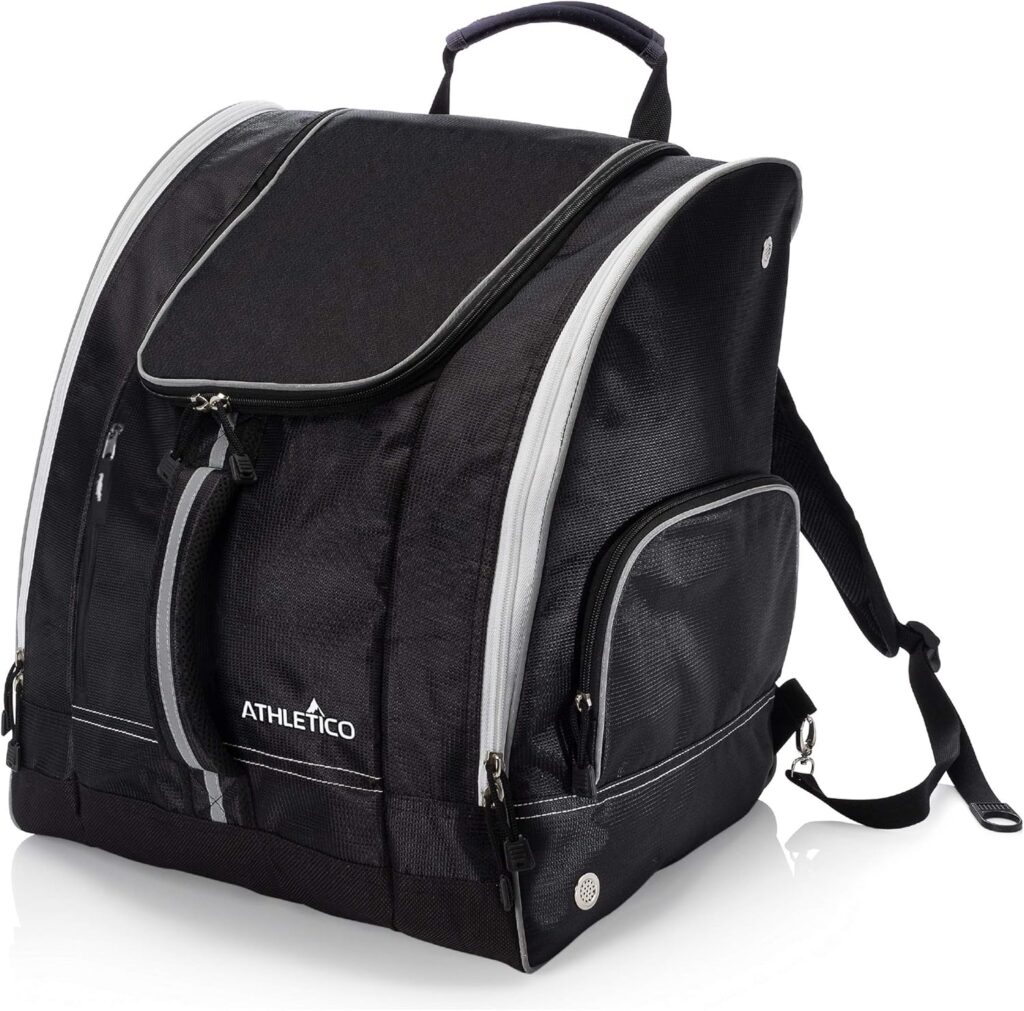
Best for: People who want a simpler, classic boot bag with easy access
Why We Like It: This is the “grab it, throw boots in, go” option. Athletico uses the classic side-entry boot storage with a main compartment for the rest of your stuff, plus water-resistant material and venting/drainage details. It’s not trying to be fancy—it’s trying to be useful.
Pros
- Side-entry boot pockets make it quick in boot rooms and parking lots
- Large main compartment works for helmet/gloves/goggles without complicated dividers
- Water-resistant build and snow-drainage/venting details help with wet boots
- Comfortable enough to carry, especially for shorter walks
Cons
- Not as “structured” as backpack-style compartment designs (you may need pouches for small items)
- If you like a dedicated helmet pocket and rigid organization, this will feel basic
Heliar 55L–70L Expandable Ski Boot Bag
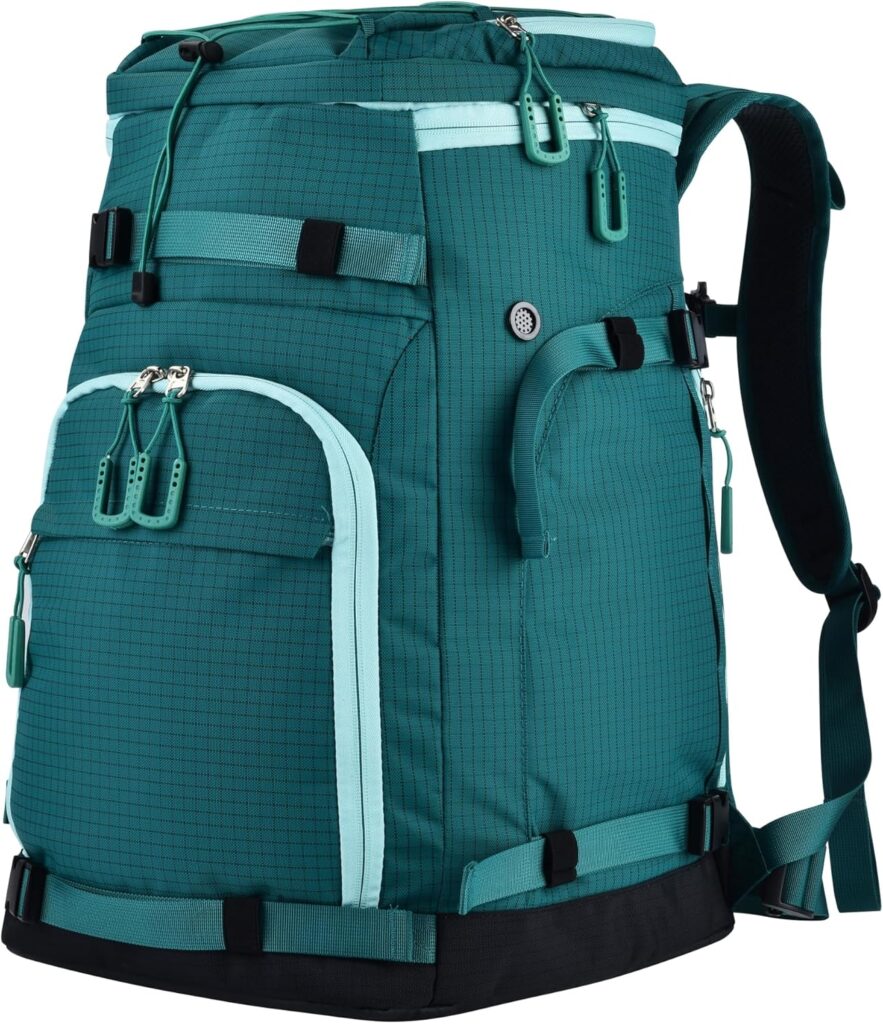
Best for: People who pack light on day trips but go full kit on weekends
Why We Like It: Expandable is genuinely useful for ski bags because your packing needs change. One day it’s just boots + helmet. Next day you’re stuffing in extra socks, a second lens, a thermos, and somehow a neck gaiter collection. This one expands from 55L to 70L and keeps the key features you want: waterproof materials, organized compartments, and a changing-mat style back panel.
Pros
- Expandable capacity (55L to 70L) is perfect for “sometimes minimal, sometimes not” trips
- Waterproof, durable materials and bottom protection for snow/slush situations
- Multiple compartments + external webbing for skis/snowboard attachment
- Comfortable padded carry system for heavier loads
Cons
- More zippers and expansion panels means more places you can snag if you’re rough with gear
- When expanded and fully loaded, it’s a big bag—great for packing, less great for small spaces
Other Things to Consider (stuff that actually matters later)
Waterproofing and drainage:
Look for a waterproof bottom and materials that don’t soak up moisture. Even “water-resistant” bags can end up damp inside if you’re tossing in wet boots daily. Also, drainage/venting matters if you don’t unpack immediately when you get home.
Weight (empty and packed):
Most people only think about capacity. But the real test is comfort when it’s fully loaded. A bag that feels fine empty can feel miserable with boots + helmet + layers. If you regularly park far away, prioritize straps and back padding.
Organization vs. speed:
More compartments = easier organization, but sometimes slower access. If you want quick in-and-out boot room changes, the simpler layouts (like the classic boot-bag style) can feel better.
Helmet protection:
Helmet pockets are nice, but goggles are the fragile item. If a bag doesn’t protect goggles well, use a goggle case or a soft pouch and store them where they won’t get crushed.
Travel friendliness:
If you fly with your bag, think about how it fits into overhead/checked luggage plans, and whether straps tuck away easily. Big 65L–70L bags are awesome, but they’re also easier to overpack.
Price and durability:
Cheaper bags can absolutely work—until zippers, stitching, or shoulder straps start complaining mid-season. If you ski a lot or travel, paying a bit more for tougher fabric and better construction is usually worth it.
Frequently Asked Questions
How big of a ski boot bag do I actually need?
If you want boots + helmet + goggles + gloves + a jacket in one bag, aim for 50L–70L. Around 50L works for day trips if you pack smart (helmet, gloves, goggles, maybe a midlayer). Once you start adding bulkier items—like insulated pants, a thick shell, extra socks, or food—a 65L or expandable 70L style is way less frustrating. If you already carry a separate duffel for clothing and just want a tidy boot solution, a classic boot bag with side pockets can be enough.
Are “waterproof” ski boot bags truly waterproof?
Usually, “waterproof” in ski boot bags means the materials and bottom panel resist snow and slush, not that the bag is a sealed dry bag. In real life, that’s what you need: a bottom that won’t soak through when you set it down on wet ground, and fabric that won’t get saturated on the walk from the car. The key is the bottom construction and whether the bag uses tougher, water-resistant panels (tarpaulin-style bottoms tend to perform better in sloppy conditions).
Will these bags fit large ski boots (size 12+), or bulky snowboard boots?
Many of the backpack-style boot bags are designed with larger adult boots in mind, but fit can still vary depending on how chunky your boots are. Some listings explicitly mention larger sizes (like men’s boots up to around 12.5 on certain models), which is a good sign. If you’re near the top end of sizing or your boots are extra bulky, prioritize bags with dedicated boot compartments (not just one big cavity) and avoid overpacking the center area so the boot pockets don’t get squeezed.
What’s the point of the flip-down “standing mat” panel?
It sounds gimmicky until you use it in a wet parking lot. The flip-down panel gives you a cleaner spot to stand while changing, helps keep socks dry, and keeps boot-room grime off your feet. It’s also useful for keeping the bag upright and stable while you’re swapping gear. If you ski often, it becomes one of those “I’m never going back” features.
How do I keep my gear from stinking up the bag?
The biggest stink source is boots (obviously). After skiing, crack your bag open as soon as you can—don’t leave it sealed overnight. If the bag has venting/drainage features, that helps, but airflow still matters. For extra credit: toss in a small boot dryer at home, or use boot deodorizer inserts. Also keep wet gloves and base layers out of the “dry” compartments if possible—stuff them in a separate pouch so moisture doesn’t spread.
Conclusion (who should get what)
If you want the safest, easiest recommendation, I’d point most people to the Unigear Ski Boot Bag Backpack for Helmet 50L/70L (ASIN B07X2WHHM7) because it nails the everyday “one bag for the mountain” job without making packing annoying. If you’re trying to spend less but still want a legit, organized, waterproof-ready bag, the SEMSTY Ski Boot Bag 55L/70L (ASIN B0BJF2H64C) is a strong value pick. If you travel a lot, pack heavy, or just want a tougher, bigger gear hauler, the RESVIN Ski Boot Bag 65L (ASIN B08FQXB4YT) is the “bring everything” style that makes sense. If you prefer a simpler classic layout with fast boot access, the Athletico Ski Boot Bag (ASIN B01MFG1362) is a clean, practical option. And if your packing changes trip to trip (day laps vs. weekend trips), the Heliar 55L–70L Expandable Ski Boot Bag (ASIN B0FMP5L9WN) is the flexible pick that prevents the “why doesn’t this fit today?” struggle.




Leave a Reply