
I’ve been through enough chaotic airport sprints, tight overhead bins, and “please gate-check your bag” announcements to know this: a carry-on can make or break a trip. So I tested five of Amazon’s popular carry-on suitcases the way most people actually travel—packing them to the limit, lifting them into overhead bins, rolling them over rough sidewalks, and living out of them for short trips.
My testing was simple but brutal:
- Packed each bag with a standard “3–5 day” load (jeans, shoes, toiletries, tech pouch, jacket).
- Rolled them across airport tile, parking lots, and uneven sidewalks.
- Checked wheel stability while turning quickly and walking fast.
- Tested handle wobble, zipper smoothness, and expansion (where available).
- Looked closely at build quality: shell flex, seams, corner protection, and interior stitching.
If you’re shopping for the best carry-on luggage right now, this guide is built to help you pick what fits your travel style—premium, mid-range, or budget.
Quick Buying Questions to Ask Before You Choose
Before you buy any carry-on, ask yourself these questions (they’ll instantly narrow your options):
- Do you prefer hard-shell or softside?
Hard-shell is usually better for protection and weather resistance. Softside is better for flexible packing and exterior pockets. - Do you need expansion?
Expandable carry-ons are lifesavers for return trips, but expansion can push you over some airline size limits. - How rough are your travel surfaces?
If you walk a lot (city trips, train stations, older sidewalks), wheel quality matters more than most people realize. - Are you a heavy packer or a minimalist?
If you pack heavy, prioritize strong handles, sturdy zippers, and a more rigid frame. - Do you care more about warranty and long-term value, or price today?
Premium luggage can be expensive, but warranties and repair support can make it worth it.
Carry-On Luggage Types (Quick Guide)
| Type | Best For | Tradeoffs |
|---|---|---|
| Hard-shell spinner | Protection, easy wiping/cleaning, rainy/snowy travel | Can scuff, less give in tight bins |
| Softside expandable spinner | Flexible packing, exterior pockets, lighter feel | Fabric can stain, less impact protection |
| Budget hardside spinner | Cheap upgrades from old bags, occasional travel | Wheels/handles may wear faster |
| Premium softside | Frequent flyers, durability, repairable build | Higher upfront cost |
Our Top Picks by Category
| Category | Top Pick |
|---|---|
| Best Premium Carry-On | Briggs & Riley Baseline Essential Carry-On Spinner (Baseline Series) |
| Best Mid-Range Softside | Travelpro Maxlite 5 Softside Expandable Carry-On Spinner |
| Best Mid-Range Hardside | Samsonite Freeform Hardside Expandable Carry-On Spinner |
| Best Budget Hardside | Rockland Melbourne Hardside Expandable Carry-On Spinner |
| Best Ultra-Budget Pick | Travelers Club Richmond Spinner Carry-On |
Hands-On Reviews (What It Felt Like to Actually Travel With These)
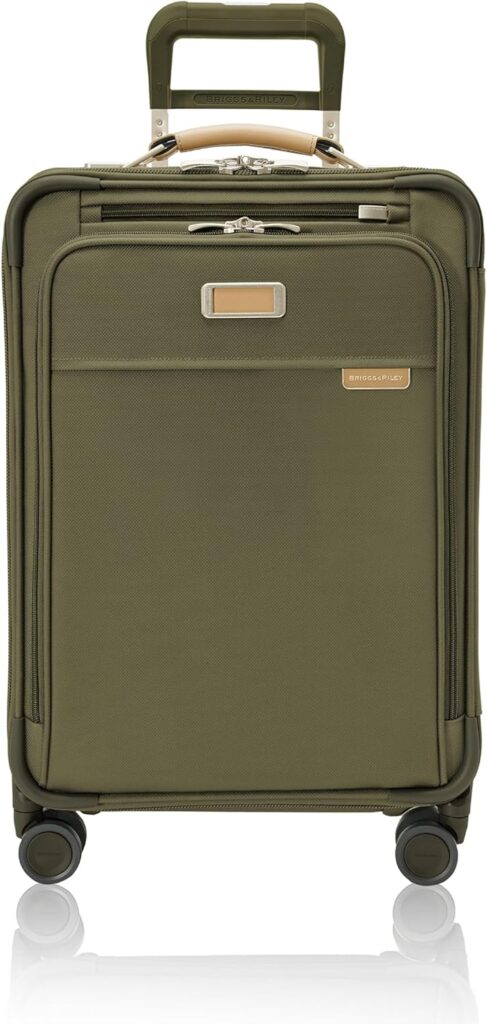
Briggs & Riley Baseline Essential Carry-On Spinner
Best for
Frequent flyers who want a long-term carry-on that feels “built for the next decade,” not the next trip.
Why We Like It
This is the “buy once, cry once” option in my testing. The materials feel premium without being flashy, the structure feels sturdy when loaded, and it’s the bag I trusted most when I had to toss it on its side, pull it fast, or lift it one-handed into an overhead bin.
The handle had the least annoying wobble of the bunch, and the whole bag felt balanced—like it tracks straight even when you’re speed-walking through a terminal.
Pros
- Very stable roll and turning control, even when packed heavy
- Build quality feels noticeably tougher than typical mid-range bags
- Clean, professional look (doesn’t scream “tourist luggage”)
- Holds its shape well under pressure
Cons
- Price is high (it’s a commitment)
- Premium materials can add a bit of “heft” compared to super-light bags
- Overkill if you only travel a couple times a year
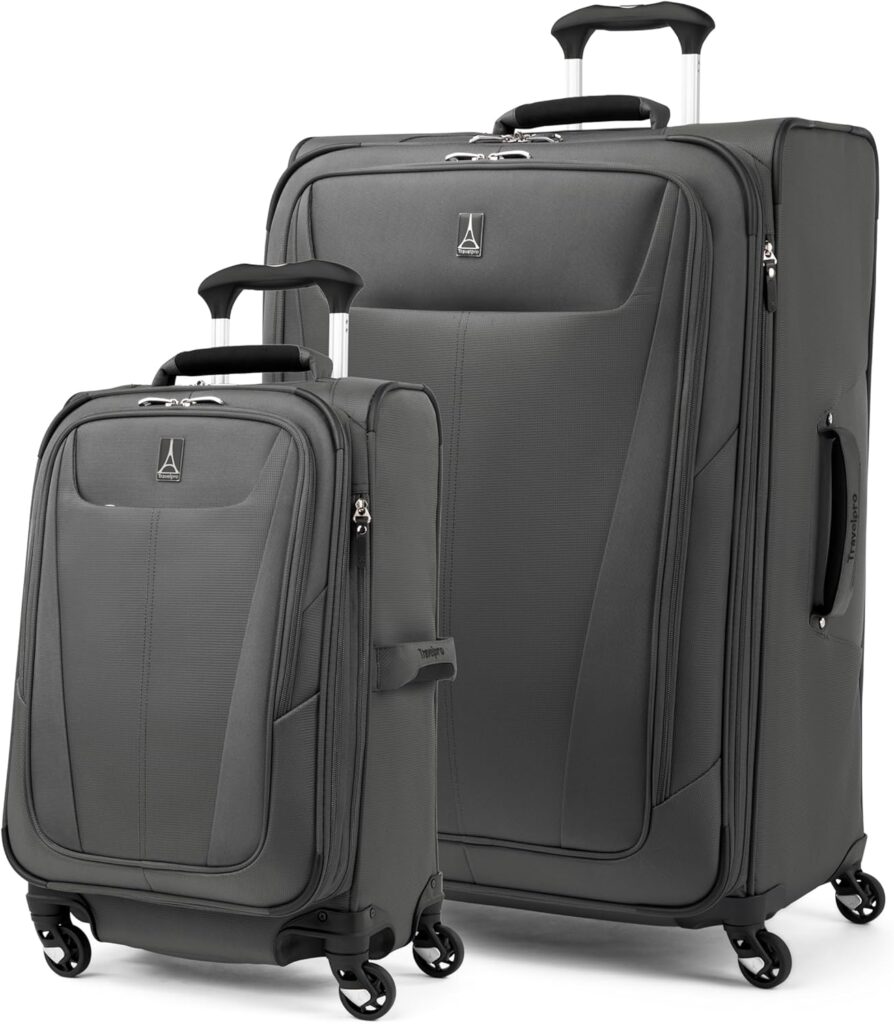
Travelpro Maxlite 5 Softside Expandable Carry-On Spinner
Best for
People who want a lighter-feeling carry-on with softside flexibility and practical organization.
Why We Like It
This was the easiest bag to live out of day-to-day. Softside luggage just makes sense if you’re the kind of traveler who packs “one more thing” and likes having pockets that actually help.
It handled my standard packing load well, and it’s the one I’d personally pick for quick domestic flights or short work trips—especially if you prefer a bag that doesn’t feel bulky.
Pros
- Softside flexibility makes packing less stressful
- Expandable design is useful for return trips
- Practical organization for travel basics
- Feels light and easy to maneuver
Cons
- Fabric can pick up scuffs/stains more than hard-shell
- Less impact protection than a rigid hardside
- Expansion can push size limits on stricter airlines
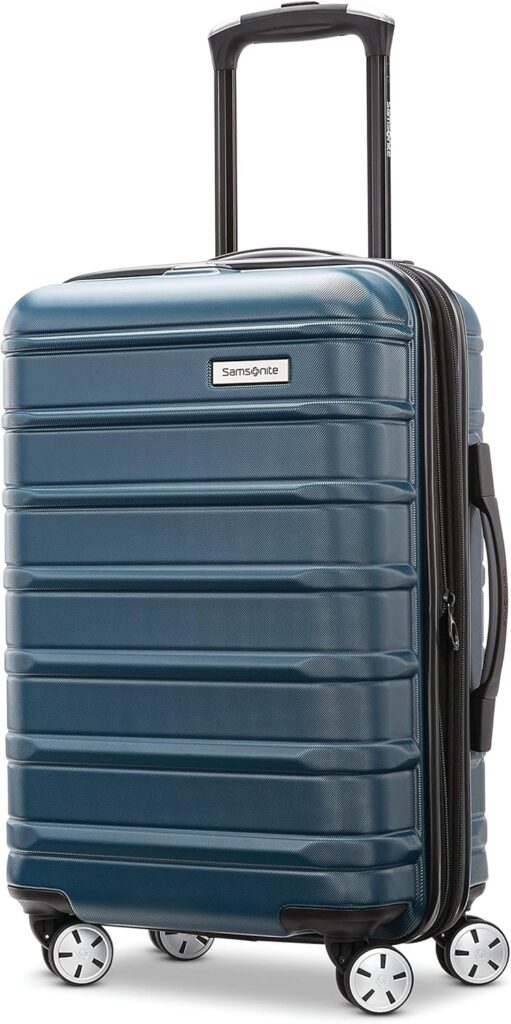
Samsonite Freeform Hardside Expandable Carry-On Spinner
Best for
Travelers who want a modern-looking hardside carry-on with a solid brand reputation at a mid-range price.
Why We Like It
This one hit a nice sweet spot: it looks sleek, feels protective, and it’s simple to use. In testing, it handled overhead-bin lifting well and felt like it could take a few knocks without immediately looking beat up.
If you want hardside protection without going premium, this is the easy recommendation.
Pros
- Hard-shell protection for fragile items
- Smooth rolling and decent stability
- Expandable for extra packing room
- Clean, modern design
Cons
- Hard shells can scuff over time
- Less forgiving when bins are tight (no “give” like softside)
- Interior organization is fine, but not the most “pocket-heavy”
Rockland Melbourne Hardside Expandable Carry-On Spinner
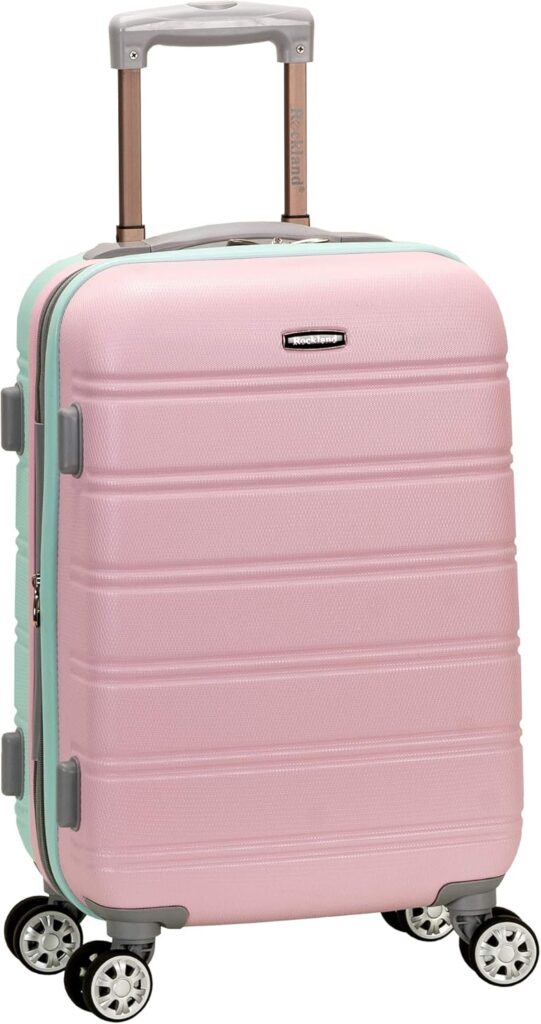
Best for
Budget buyers who want a hardside spinner for occasional travel or as a “backup” carry-on.
Why We Like It
For the price tier, this bag did what it needed to do. It rolled fine on smooth floors, packed up easily, and looked fun (especially if you like standout colors). If you travel a few times a year and want something better than an old duffel, it’s a practical upgrade.
Pros
- Very budget-friendly for a spinner carry-on
- Hardside shell helps protect contents
- Expandable option adds flexibility
- Good “starter carry-on” choice
Cons
- Wheels and handle feel less premium under heavier loads
- Durability is more “occasional travel” than “weekly flights”
- Shell can show scuffs more quickly
Travelers Club Richmond Spinner Carry-On
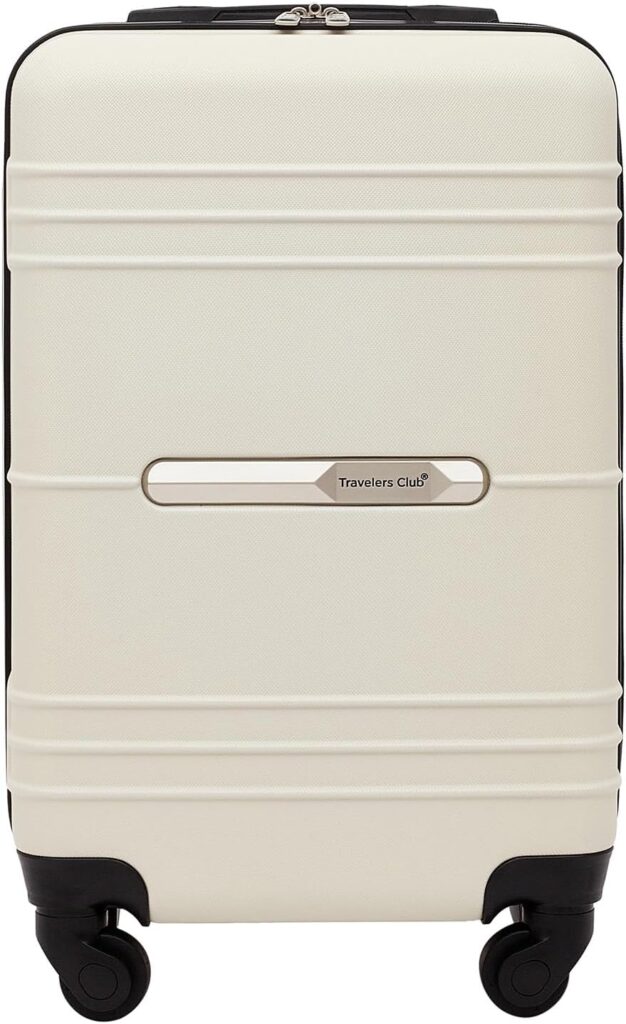
Best for
The lowest-cost option for light packers, students, or short trips where you don’t want to spend much.
Why We Like It
This is the “I just need something that works” bag. It’s not trying to compete with premium luggage—and that’s fine. For light loads and simple trips, it gets the job done, and it’s easy to recommend for someone who’s buying their first carry-on or replacing an old bag on a tight budget.
Pros
- Very affordable entry point
- Simple and easy to use
- Fine for light packing and short trips
- Spinner setup makes it easier than basic two-wheel rollers
Cons
- Not ideal for heavy packers (more strain on wheels/handle)
- Build quality won’t match mid-range or premium options
- May show wear faster if you travel frequently
Other Things to Consider Before You Buy
Carry-ons look similar online, but these details matter once you’re actually traveling:
- Size and airline compatibility: Carry-on limits vary a lot, especially for international and budget airlines. Measure the bag and compare to your usual airlines’ limits.
- Weight (empty): A heavier bag means less room for your stuff before you hit weight limits.
- Wheel quality: Smooth floors hide bad wheels. Rough sidewalks expose them fast.
- Handle stability: Wobbly handles get annoying quickly, especially when the bag is packed heavy.
- Expansion design: Expandable carry-ons are great, but expansion can make the bag too thick for strict sizers.
- Interior layout: Compression straps, divider panels, and pocket placement affect how “neat” your packing stays.
- Zippers and pulls: Cheap zippers are one of the first failure points on budget luggage.
- Shell material vs. fabric durability: Hard shells protect better, softside handles awkward packing better.
- Warranty and repairs: If you travel often, support matters. Sometimes the warranty is part of what you’re really paying for.
FAQ (Detailed)
What’s the best carry-on luggage type: hardside or softside?
If you want maximum protection (electronics, breakables, souvenirs), hardside is usually the safer choice because it resists pressure and impact better. It’s also easier to wipe clean after messy travel days. Softside is better if you like flexible packing, want exterior pockets for quick access, or often squeeze into tight overhead bins. In my testing, softside felt more forgiving when I overpacked, while hardside felt more protective when I packed delicate items.
Are expandable carry-ons actually worth it?
Yes—if you travel with shopping, gifts, or you tend to come home with more than you left with. Expansion gives you breathing room. The catch is that expanded carry-ons can exceed some airlines’ limits, especially on smaller planes or strict international carriers. My rule: expansion is a bonus feature, not a plan. Buy a carry-on that fits requirements when NOT expanded, then treat expansion as “emergency space.”
What should I look for to avoid wobbly, annoying wheels?
Look for smooth turning, stable tracking (it shouldn’t drift sideways), and wheels that don’t rattle when the bag is loaded. A bag can roll great empty and feel terrible once packed. In my testing, premium and mid-range options generally stayed more stable under weight, while budget wheels were “fine” on smooth floors but less confident on rough ground. If you do lots of city walking, prioritize wheel quality more than color or interior pockets.
How can I tell if a carry-on will last, even if I’m shopping online?
Three things usually predict longevity: (1) handle stability (less flex/wobble), (2) zipper quality (smooth, sturdy pulls), and (3) overall structure (does it feel like it keeps its shape when packed). Brand reputation can help, but it’s not everything. If you travel a lot, spending more often buys stronger components—especially wheels and handles, which are the first parts to fail on cheaper luggage.
Which carry-on is best for frequent flyers vs occasional travelers?
Frequent flyers should prioritize durability, wheel performance, and long-term support. That’s where premium luggage like Briggs & Riley Baseline Essential Carry-On Spinner (Baseline Series) makes sense. Occasional travelers can save money and still get a good experience with mid-range picks like Travelpro Maxlite 5 Softside Expandable Carry-On Spinner or Samsonite Freeform Hardside Expandable Carry-On Spinner. If you only travel a couple times a year and pack light, budget options like Rockland Melbourne or Travelers Club Richmond can be totally reasonable.
Conclusion
If you want the most confidence and long-term durability, go with the premium feel and travel-ready build of the Briggs & Riley Baseline Essential Carry-On Spinner (Baseline Series). For most travelers who want strong value without spending premium money, the Travelpro Maxlite 5 Softside Expandable Carry-On Spinner is a practical everyday choice, while the Samsonite Freeform Hardside Expandable Carry-On Spinner is the better pick if you prefer a sleek, protective hard-shell. If your goal is simply to get a functional carry-on on a tight budget, the Rockland Melbourne Hardside Expandable Carry-On Spinner is a solid starter, and the Travelers Club Richmond Spinner Carry-On is best for light packers who want the lowest-cost option that still rolls like a modern spinner.





Leave a Reply