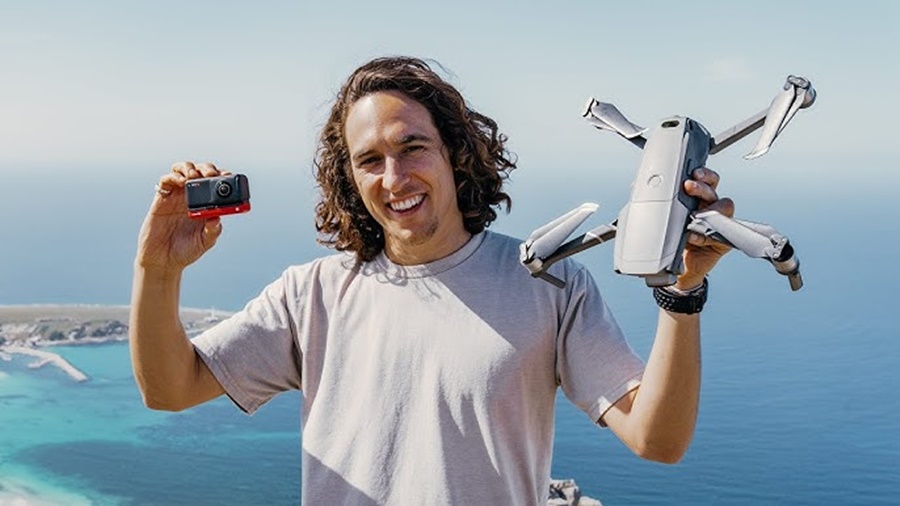
In today’s world of content creation and adventure filming, both action cameras and drones have become incredibly popular tools. Whether you’re a traveler, vlogger, athlete, or filmmaker, choosing between these two devices depends on what kind of footage you want and how you plan to capture it. While both are used to record videos and take photos, they serve very different purposes.
This article provides a complete comparison between action cameras and drones to help you decide which one suits your needs best.
1. What is an Action Camera?
An action camera is a small, lightweight, and rugged camera designed to capture immersive footage in motion. These cameras are typically wearable or mountable on helmets, bikes, cars, or even the body.
Key Features:
- Compact and portable
- Waterproof and shock-resistant
- Wide-angle lens (often ultra-wide)
- Hands-free operation using mounts
- Ideal for first-person (POV) shots
Common Uses:
- Sports activities (cycling, surfing, skiing)
- Vlogging and travel videos
- Underwater recording
- Daily life recording in dynamic environments
2. What is a Drone?
A drone, also known as an unmanned aerial vehicle (UAV), is a flying device equipped with a camera that captures footage from the air. It is controlled remotely and offers a completely different perspective compared to handheld or mounted cameras.
Key Features:
- Aerial photography and videography
- GPS stabilization and intelligent flight modes
- High-resolution cameras (often 4K or higher)
- Long-range control
- Automated flight paths and tracking
Common Uses:
- Landscape and scenic shots
- Real estate and architectural filming
- Cinematic filmmaking
- Event coverage (weddings, outdoor events)
3. Key Differences Between Action Cameras and Drones
3.1 Perspective and Shot Type
- Action Camera: Captures close-up, immersive, first-person footage.
- Drone: Provides wide, aerial, cinematic shots from above.
3.2 Portability
- Action Camera: Extremely portable, fits in your pocket.
- Drone: Bulkier and requires a carrying case.
3.3 Ease of Use
- Action Camera: Very easy to use; just mount and record.
- Drone: Requires practice, piloting skills, and understanding of controls.
3.4 Durability
- Action Camera: Built for tough conditions (water, dust, impact).
- Drone: More fragile; crashes can cause serious damage.
3.5 Battery Life
- Action Camera: Typically 1–2 hours depending on usage.
- Drone: Usually 20–40 minutes per flight.
3.6 Cost
- Action Camera: Generally more affordable.
- Drone: Can be expensive, especially high-end models.
3.7 Legal Restrictions
- Action Camera: No special legal restrictions in most cases.
- Drone: Subject to strict regulations in many countries (flight zones, permits, altitude limits).
4. Advantages of Action Cameras
- Excellent for capturing action-packed moments
- Durable and weather-resistant
- Affordable and beginner-friendly
- Versatile mounting options
- Great for POV storytelling
Limitations:
- Limited field of view compared to drones
- Cannot capture aerial perspectives
- Lower cinematic flexibility
5. Advantages of Drones
- Stunning aerial views and cinematic shots
- Advanced shooting modes (follow, orbit, waypoint)
- Ideal for professional video production
- High-quality stabilized footage
Limitations:
- Requires skill to operate
- Expensive and fragile
- Limited battery life
- Restricted usage in some areas
6. Which One Should You Choose?
Choose an Action Camera if:
- You want to record your personal experiences
- You participate in sports or outdoor adventures
- You need a rugged and portable device
- You prefer simplicity and affordability
Choose a Drone if:
- You want cinematic aerial footage
- You are into filmmaking or professional videography
- You want to capture landscapes and large environments
- You’re willing to learn flying skills and follow regulations
7. Can You Use Both?
Absolutely. Many content creators use both action cameras and drones together. For example:
- Use an action camera for ground-level and POV shots
- Use a drone for aerial and wide-angle scenes
Combining both can significantly enhance storytelling and production quality.
Conclusion
Action cameras and drones are powerful tools, but they serve different creative purposes. An action camera brings viewers into the action, while a drone shows the bigger picture from above. Your choice depends on your goals, budget, and the type of content you want to create.
If possible, using both devices together offers the best of both worlds immersive detail and breathtaking perspectives.




Leave a Reply