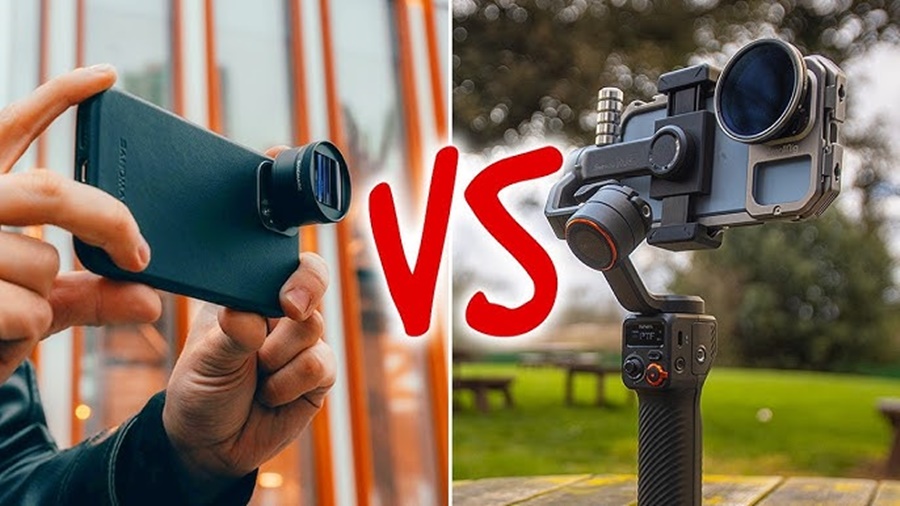
In today’s content-driven world, capturing smooth, high-quality video is more important than ever whether you’re a traveler, vlogger, athlete, or casual creator. Two popular tools dominate this space: action cameras and phone gimbals. While both are designed to improve video quality, they serve very different purposes. Choosing between them depends on how, where, and what you plan to shoot.
This article breaks down the key differences, strengths, and limitations of each so you can make the right decision.
What Is an Action Camera?
An action camera is a compact, rugged device designed to capture high-quality video in extreme environments. These cameras are built for durability, portability, and versatility.
Key Features
- Rugged Design: Waterproof, shockproof, and dust-resistant
- Wide-Angle Lens: Captures more of the scene, ideal for action shots
- Mounting Options: Can be attached to helmets, bikes, drones, and more
- High Frame Rates: Great for slow-motion footage
- Compact Size: Easy to carry anywhere
Best Use Cases
- Adventure sports (surfing, skiing, biking)
- Travel vlogging in harsh conditions
- Underwater filming
- POV (point-of-view) shots
Pros
- Extremely durable
- Can shoot in environments where phones cannot
- Lightweight and portable
- Excellent stabilization (in modern models)
Cons
- Limited screen and controls
- Audio quality is often weaker
- Fixed wide-angle lens may distort shots
- Not ideal for cinematic storytelling
What Is a Phone Gimbal?
A phone gimbal is a handheld stabilizer designed to hold your smartphone and eliminate shaky footage using motorized stabilization.
Key Features
- 3-Axis Stabilization: Smooth, professional-looking footage
- Smart Tracking: Follows subjects automatically
- Creative Modes: Time-lapse, hyperlapse, panorama, etc.
- App Integration: Advanced controls through smartphone apps
- Ergonomic Grip: Comfortable for long shooting sessions
Best Use Cases
- Vlogging and YouTube videos
- Cinematic filmmaking
- Event coverage
- Social media content creation
Pros
- Superior stabilization for smooth video
- Uses your smartphone’s powerful camera
- Better audio (via phone microphones or external mics)
- More control over settings and framing
Cons
- Not rugged or weatherproof
- Requires charging and setup
- Bulkier than an action camera when in use
- Limited in extreme environments
Key Differences
1. Stabilization
- Action cameras have built-in digital stabilization, which is good but can struggle in intense motion.
- Gimbals offer mechanical stabilization, resulting in ultra-smooth, cinematic footage.
Winner: Phone gimbal
2. Durability
- Action cameras are built for extreme conditions—water, dust, drops.
- Gimbals are delicate and not suitable for rough environments.
Winner: Action camera
3. Video Quality
- Action cameras are optimized for wide-angle, action-heavy footage.
- Smartphones (on a gimbal) often deliver better dynamic range, color, and low-light performance.
Winner: Phone gimbal (in most everyday scenarios)
4. Portability
- Action cameras are pocket-sized and mountable.
- Gimbals require carrying both the stabilizer and your phone.
Winner: Action camera
5. Ease of Use
- Action cameras are simple: turn on and record.
- Gimbals involve balancing, app setup, and calibration.
Winner: Action camera
6. Versatility
- Action cameras excel in specific scenarios (sports, travel, underwater).
- Gimbals are more versatile for storytelling, interviews, and creative shooting.
Winner: Phone gimbal
Which One Should You Choose?
Choose an Action Camera if:
- You shoot in extreme or outdoor environments
- You need something rugged and waterproof
- You want a hands-free or mountable camera
- You focus on action, sports, or travel adventures
Choose a Phone Gimbal if:
- You prioritize smooth, cinematic footage
- You create content for YouTube, TikTok, or Instagram
- You want better audio and camera control
- You shoot mostly in controlled or urban environments
Can You Use Both?
Absolutely. Many content creators use both tools together:
- An action camera for dynamic, high-risk shots
- A phone gimbal for polished, stable footage
This combination gives you flexibility and professional-level results across different shooting conditions.
Conclusion
There’s no universal winner between an action camera and a phone gimbal they are designed for different purposes. If your focus is adventure and durability, the action camera is the clear choice. If your goal is cinematic storytelling and smooth visuals, a phone gimbal paired with a modern smartphone is hard to beat.
Ultimately, the best tool is the one that fits your shooting style and environment.






Leave a Reply