
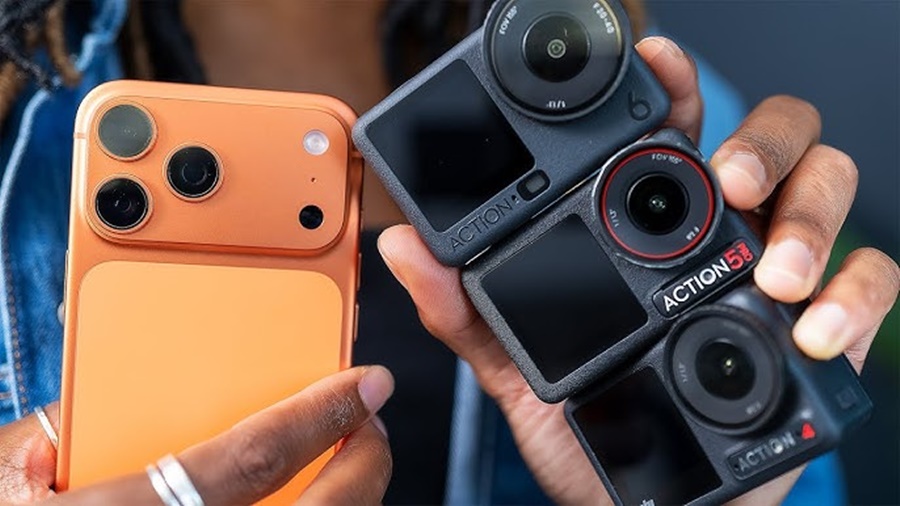
In today’s world, almost everyone carries a powerful camera in their pocket, thanks to smartphones. At the same time, action cameras have carved out their own niche among adventurers, vloggers, and sports enthusiasts. But which one is better? The answer depends on how and where you plan to use it.
This article explores the key differences between action cameras and smartphone cameras to help you decide which suits your needs best.
1. What Is an Action Camera?
An action camera is a compact, rugged device specifically designed to capture fast-moving activities. These cameras are typically small, lightweight, and built to withstand harsh conditions such as water, dust, and shocks.
They are commonly used for:
- Sports (cycling, skiing, surfing)
- Travel adventures
- Underwater recording
- First-person (POV) videos
2. What Is a Smartphone Camera?
A smartphone camera is built into your mobile device and is designed for everyday photography and videography. Modern smartphones feature advanced camera systems with multiple lenses, AI enhancements, and powerful image processing.
They are commonly used for:
- Daily photography
- Social media content
- Video calls and casual videos
- Low-light photography
3. Image and Video Quality
Smartphone cameras have significantly improved over the years. They often produce sharper images, better color accuracy, and superior low-light performance due to advanced sensors and software processing.
Action cameras, on the other hand, are optimized for video rather than still photos. They excel in capturing smooth, stable footage during motion, especially in outdoor environments.
Verdict:
- For photos and low-light shots → Smartphone wins
- For action videos and movement → Action camera wins
4. Durability and Build Quality
Action cameras are built tough. Most are waterproof, shockproof, and dustproof without needing extra protection.
Smartphones are relatively fragile. While many are water-resistant, they are not designed for extreme environments without protective cases.
Verdict:
- Rough use and extreme conditions → Action camera
- Everyday safe use → Smartphone
5. Portability and Mounting Options
Action cameras are extremely portable and can be mounted on helmets, bikes, cars, or even drones. This makes them ideal for hands-free recording.
Smartphones are portable too, but mounting them securely during high-action activities can be difficult and risky.
Verdict:
- Hands-free and mounting flexibility → Action camera
- Convenience in pocket → Smartphone
6. Stabilization
Action cameras feature advanced electronic image stabilization (EIS), making videos smooth even during intense movement.
Smartphones also offer stabilization, but they may struggle in very high-motion scenarios compared to action cameras.
Verdict:
- High-motion stability → Action camera
- Casual video stabilization → Smartphone
7. Battery Life
Action cameras usually have smaller batteries and may require frequent charging or spare batteries for long shoots.
Smartphones generally have larger batteries, but heavy camera use can drain them quickly, affecting other phone functions.
Verdict:
- Dedicated shooting sessions → Action camera (with spare batteries)
- Multi-purpose use → Smartphone
8. Ease of Use
Smartphones are easier to use due to their large touchscreens, intuitive interfaces, and built-in editing apps.
Action cameras often require additional setup, accessories, and sometimes companion apps for full control.
Verdict:
- Simplicity → Smartphone
- Specialized control → Action camera
9. Cost
Smartphones are expensive but serve multiple purposes beyond photography.
Action cameras are usually cheaper than flagship smartphones but are an additional device rather than a replacement.
Verdict:
- All-in-one value → Smartphone
- Dedicated filming tool → Action camera
10. Best Use Cases
Choose an Action Camera if you:
- Record sports or outdoor adventures
- Need a rugged and waterproof device
- Want hands-free filming with mounts
Choose a Smartphone Camera if you:
- Take everyday photos and videos
- Want high-quality images and portraits
- Prefer convenience and ease of use
Conclusion
If your focus is on extreme environments, motion-heavy activities, and immersive video capture, an action camera is the better choice. However, if you want versatility, high-quality photos, and convenience in one device, a smartphone camera is hard to beat.
In many cases, people find that using both together offers the best of both worlds: a smartphone for daily use and an action camera for adventure.





Leave a Reply